Dispatch of the latest on gold mining impacts across the Amazon
Reserva Ecológica Cofán Bermejo / Provincia de Sucumbíos, Ecuador. Photo: Fundación EcoCiencia.
Amazon Mining Watch | Panorama provides critical insights into the escalating threat of illegal gold mining across the Amazon. Based on AI-powered detection of mining scars anywhere in the basin using Amazon Mining Watch (AMW), a multi-partner platform led by Amazon Conservation, Earth Genome, and the Pulitzer Center, Panorama reports provide a data-driven perspective on the environmental challenges facing the world’s largest rainforest.
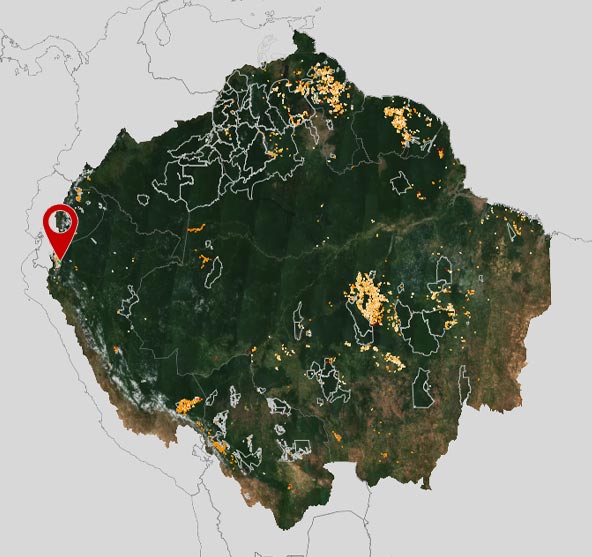
This inaugural Panorama report analyzes gold mining activity in the Amazon occurring in the fourth quarter of 2025, covering October through December. This report provides regional trends of gold-mining driven deforestation and key examples of new incursions into Protected Areas and Indigenous Territories previously untouched by mining, cases of resurgence of mining in those areas, and areas with persistent and accelerating mining deforestation.
As gold prices continue to rise, timely detection of new expansion of mining areas through a consistent, wall-to-wall methodology can support a swift and coordinated enforcement response from authorities across borders.
Scroll to read the report or download the PDF using the button below.
Regional trends of gold mining-driven deforestation
Key findings from October to December 2025:
KEY FINDINGS
Amazonian countries impacted
All 9 countries that comprise the Amazon experienced deforestation caused by gold mining in the last quarter of 2025, including in areas legally safeguarded for conservation such as protected areas and Indigenous territories.
Hectares of forests impacted
Over 6,000 hectares/14,000 acres of new mining-related deforestation across the Amazon were identified, highlighting the scale and urgency of the crisis facing the world’s largest tropical forest. That’s an area equivalent to about seven times the size of Central Park in New York City.
Gold Mining Destruction: Breakdown in Key Amazonian Countries
Hectares in Brazil
Hectares in Peru
Hectares in Guyana
Hectares in Bolivia, Colombia, Ecuador, French Guiana, Suriname, and Venezuela combined
NEW INCURSIONS ON PROTECTED AREAS OR INDIGENOUS TERRITORIES
This section lists areas with no mining detected since 2018 but where mining scars have been detected in the last quarter, highlighting totally new—and highly likely to be illegal—incursions in areas designated for conservation or indigenous territories.
Detection polygons for each of these cases are visible on the Amazon Mining Watch geovisor, where the full time series of mining expansion since 2018 can be consulted. Where available, high-resolution Planet imagery is also provided, confirming the nature of the activity causing deforestation.
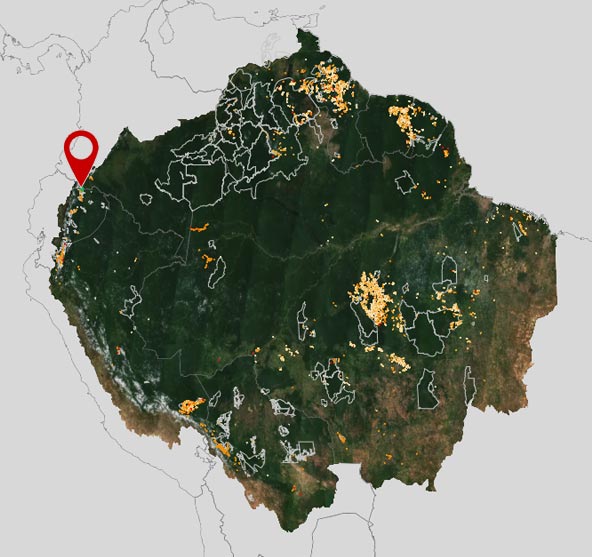
Under this category, only one new mining incursion was detected in the last quarter, across legally recognized Indigenous territories and protected areas.
TERRITORIO CHARIP
ECUADOR
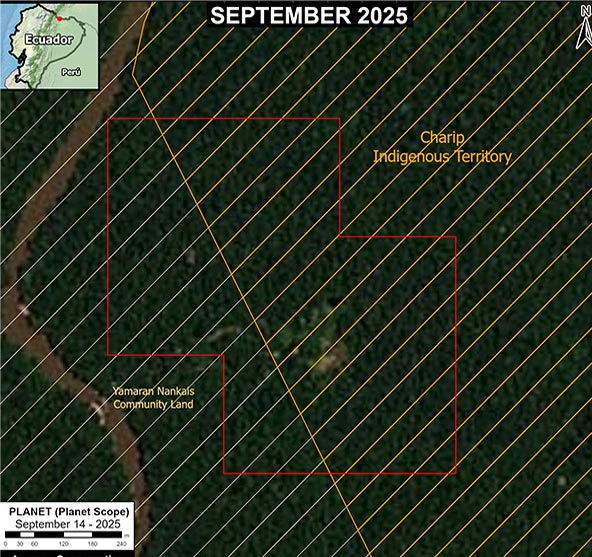
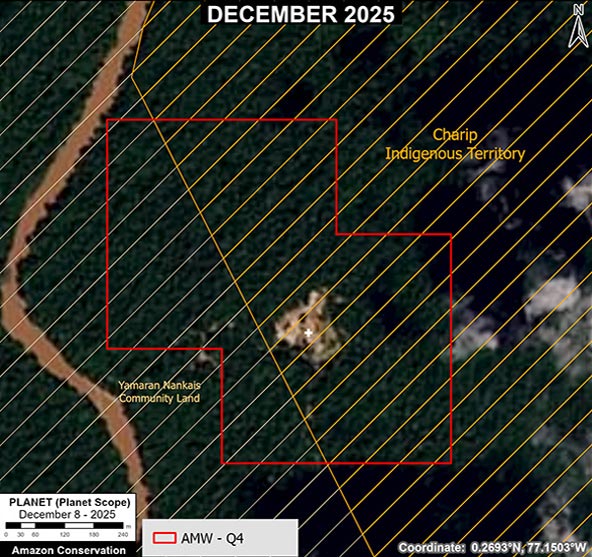
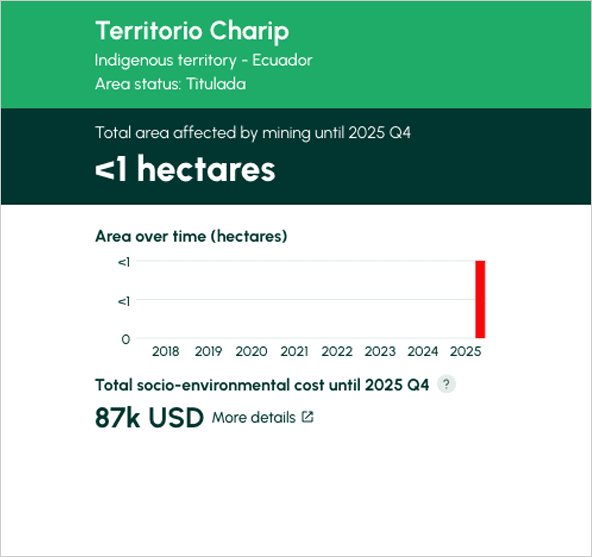
The Territorio Charip was officially recognized by the Government of Ecuador in 2025. It is designated as an Indigenous Territory titled under the stewardship of the Shuar people. Located in Sucumbíos Province, the territory safeguards vital lowland tropical rainforest within the Tropical Andes–Amazon transition zone, as well as critical headwaters that feed into the Aguarico and Putumayo River basins.
Mining update: The territory appears to have suffered from a small mining incursion in the last quarter, which would mark the first time that mining has occurred in the area, even prior to its designation.
Planet Panel: The high resolution Planet Scope Images (3 m), shows the before (left) and after (right) of the new mining incursion.
RESURGENCE OF MINING DEFORESTATION IN PROTECTED AREAS AND INDIGENOUS TERRITORIES
This section lists protected areas and indigenous territories where new mining scars have been detected in the last quarter, and where no new mining scars had been detected in the past three quarters, indicating mining sites where activity had previously abated – possibly following enforcement operations – but has recently resurged.
Under this category, five (5) areas were detected in the last quarter: one in Brazil, two in Ecuador and two in Guyana.
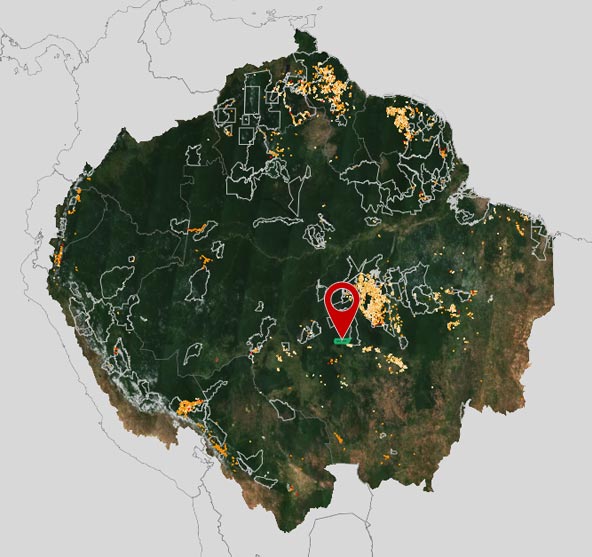
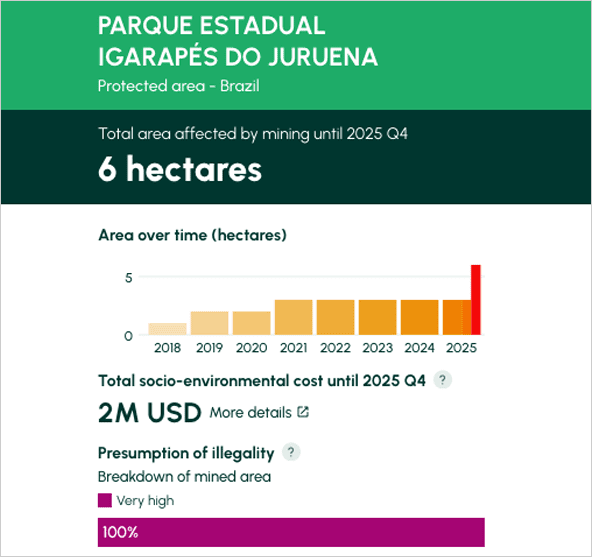
PARQUE ESTADUAL IGARAPÉS DO JURUENA
BRAZIL
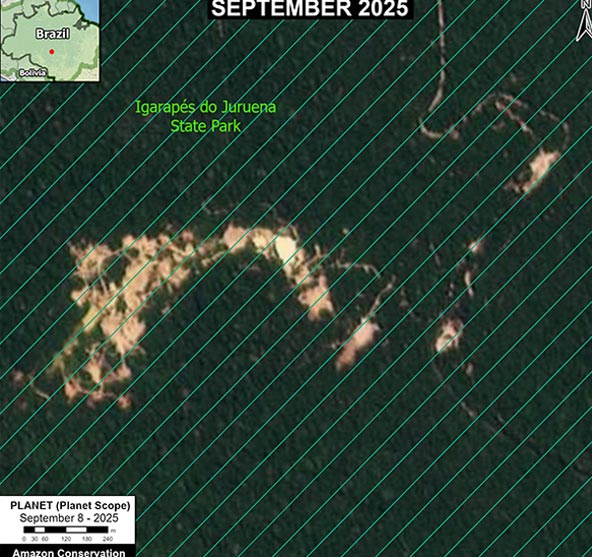
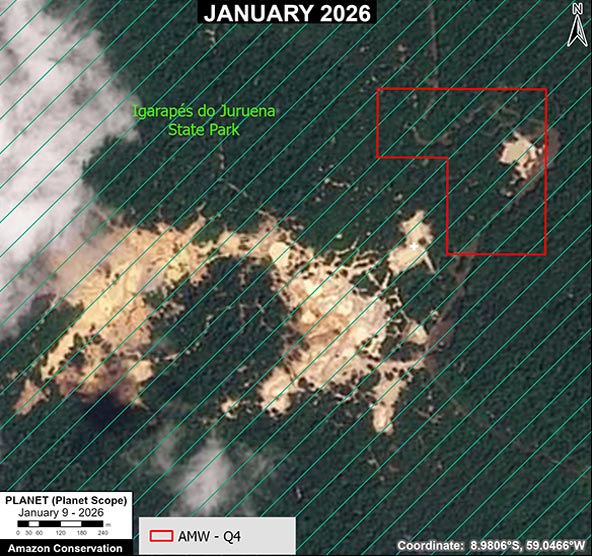
The Igarapés do Juruena State Park was established in 2022. The land is designated as an Integral Protection unit dedicated to ecosystem preservation and scientific research with permitted public visitation and environmental education. Located in the state of Mato Grosso, the park lies within the Juruena River basin and protects a critical transition zone between the Amazon rainforest and the Cerrado (savanna) biomes.
Planet Panel: The high resolution Planet Scope Images (3 m), shows the before (left) and after (right) of the remarkable growth of mining activity.
TUNANTS INDIGENOUS TERRITORY
ECUADOR
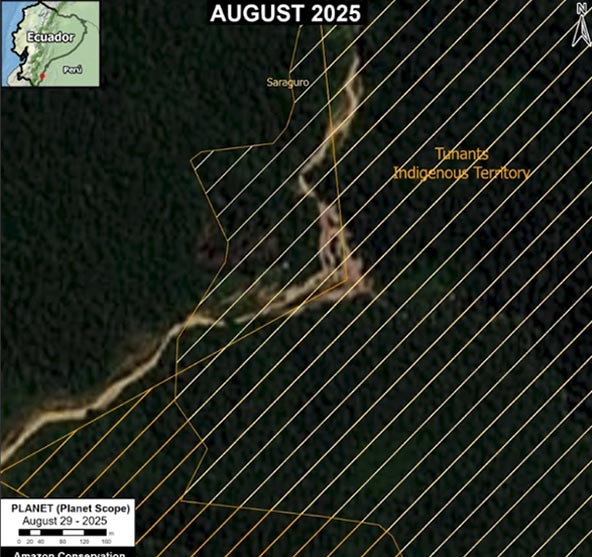
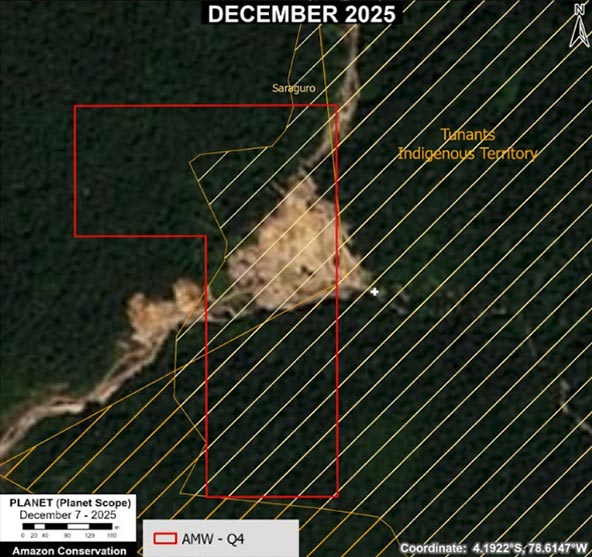
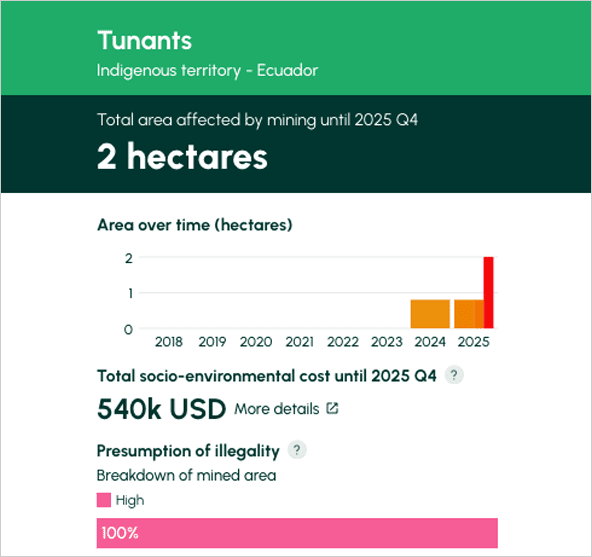
The Tunants Indigenous Territory was formally established with the issuance of its legal land title in 2025. Designated as a Protected Forest (Bosque y Vegetación Protectora), it lies within the Kutukú Shaimi Protected Forest. The territory is stewarded by the Shuar people, who use traditional knowledge and contemporary conservation practices to manage their territory.
Planet Panel: The high resolution Planet Scope Images (3 m), shows the before (left) and after (right) of the remarkable growth of mining activity entering the Indigenous Territory.
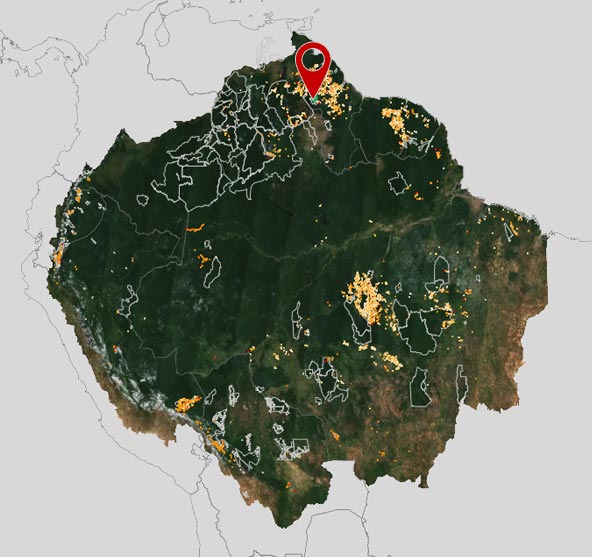
KAMARANG KENG INDIGENOUS TERRITORY
GUYANA
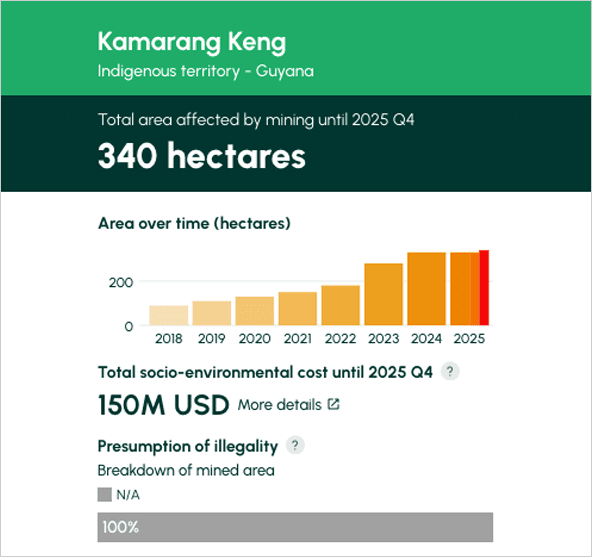
The Kamarang Keng Indigenous Territory was formally established in 1991 and is primarily inhabited by the Akawaio people, located in the Upper Mazaruni region. Classified as Titled Amerindian Village Land, the territory is legally recognized under Guyanese law.
Mining update: The area of mining scars in Kamaran Keng territory grew between 20218 and 2024, but had shown signs of abatement since, potentially indicating abandonment of the area after an enforcement operation. Yet, despite no mining expansion in the first 3 quarters of 2025, almost 10 hectares of new mining scars were detected in the period Oct-Dec.
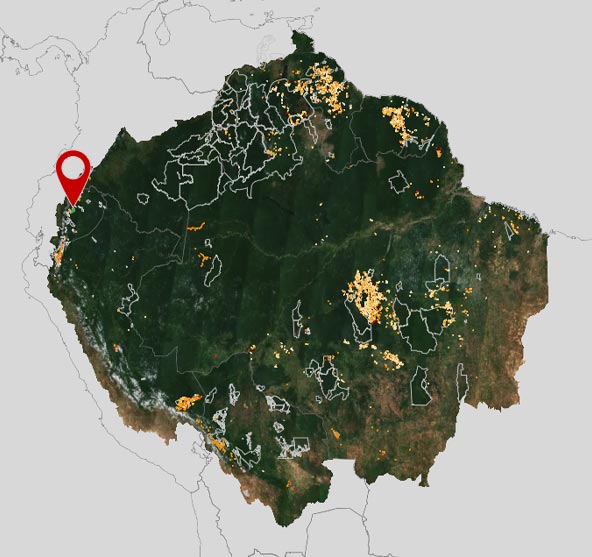
ARAJUNO CHICHICO RUMI INDIGENOUS TERRITORY
ECUADOR
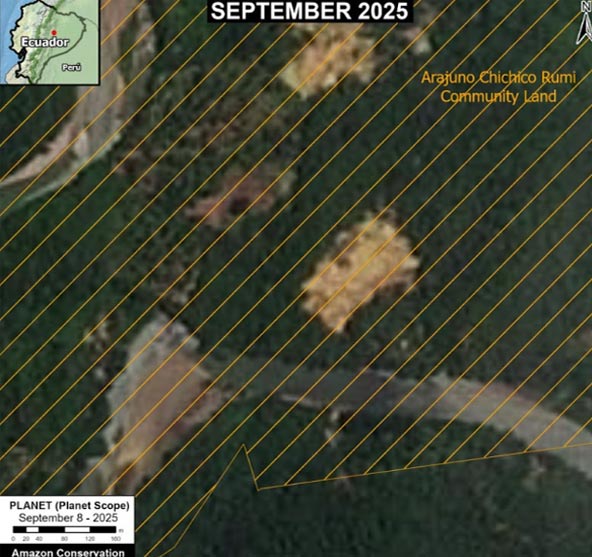
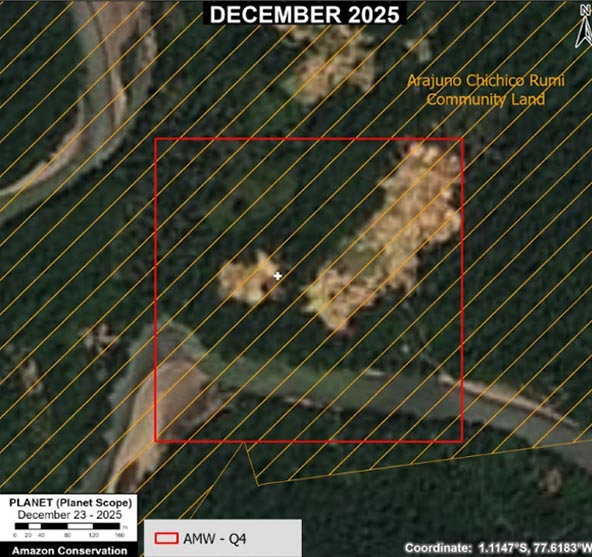
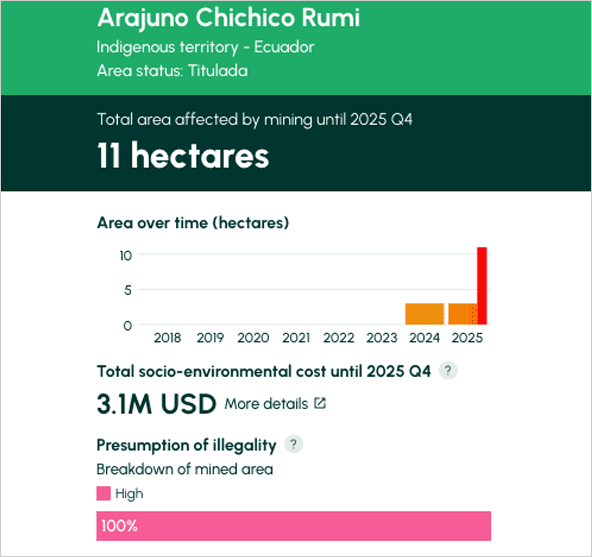
The Arajuno Chichico Rumi Indigenous Territory received formal titulation as an Indigenous Territory in 2025. The area is an ancestral Kichwa territory that has been associated with the Puka Rumi and Chichico Rumi communities in the Napo and Pastaza provinces. The territory’s legal status is defined by the collective land rights of the Kichwa people, which are at various stages of formal recognition.
Mining update: Prior to its formal recognition, the Arujuno Chichico Rumi Territory had registered only minimal signs of mining activity (3.36), yet the area of mining scars more than tripled in the last quarter of 2025.
Planet Panel: Planet Panel: The high resolution Planet Scope Images (3 m), shows the before (left) and after (right) of the growth of mining activity within Indigenous Territory.
ARAU INDIGENOUS TERRITORY
GUYANA
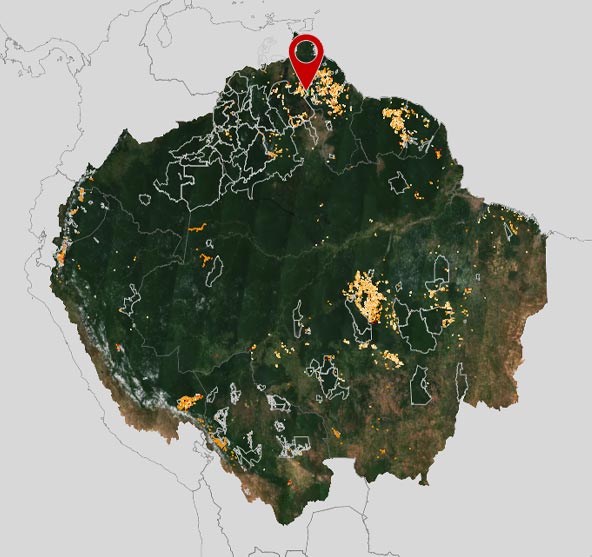
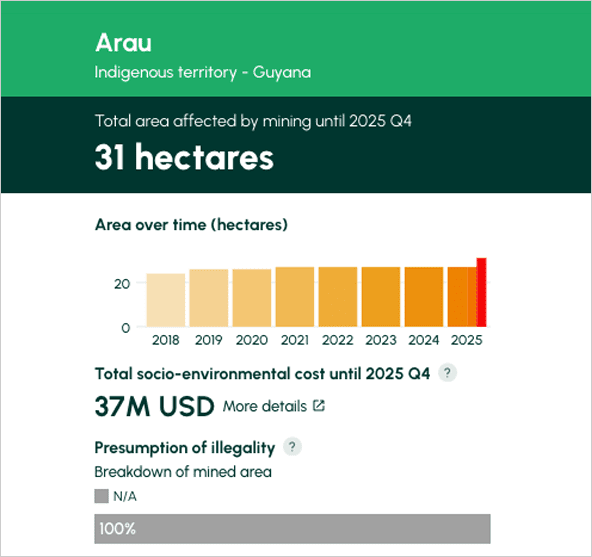
The Arau Indigenous Territory was formally recognized as a Titled Amerindian Village Land under national law in 1991. The territory is primarily inhabited by the Akawaio people and is located in the Cuyuni-Mazaruni region near the border with Venezuela.
PROTECTED AREAS AND INDIGENOUS TERRITORIES WHIT PERSISTENT AND ACCELERATING MINING DEFORESTATION
This section lists protected areas, indigenous territories with persistent mining-driven deforestation that have seen notable expansion in the past quarter. Many areas across the Amazon continue to experience gold mining-related deforestation, however the following four (4) – two in Peru, one in Venezuela and one in Brazil – were selected for the persistent and accelerating character of this driver.
YAPACANA - PROTECTED AREA
VENEZUELA
Yapacana National Park was established in 1978 under Presidential Decree No. 2,980. Situated in Venezuela’s Amazonas department, the park is centered on the Cerro Yapacana, a sandstone tepui. As the park holds an IUCN Category II protected area, it enjoys protected status while remaining open to the public for spiritual, scientific, educational, and recreational activities.
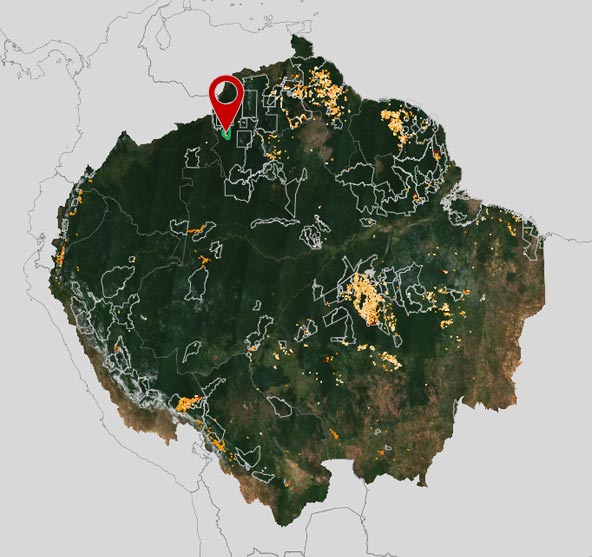
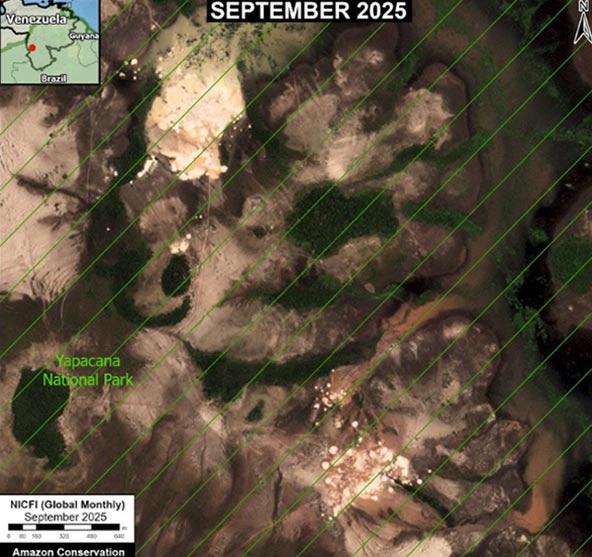
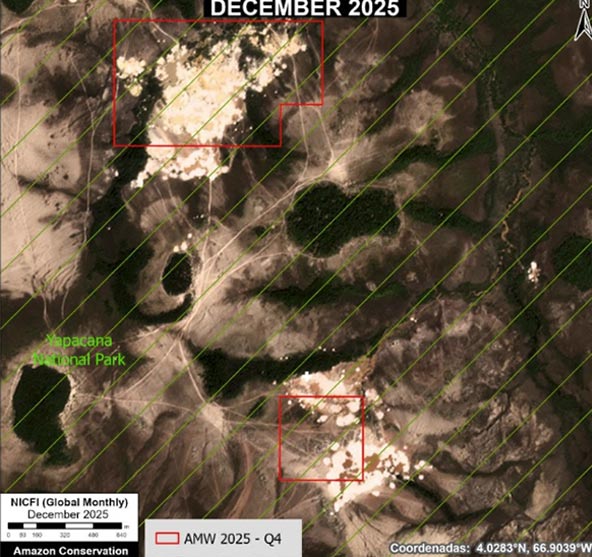
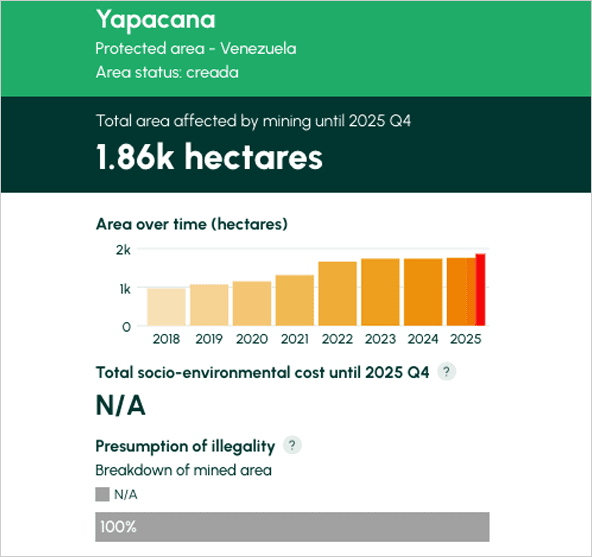
Mining update: Mining expansion in the Yapacana NP seemed to have stabilized since 2024, following enforcement operations from the Venezuelan authorities. Although we had reported new mining on top of the Tepui in MAAP #234, mining expansion through most of 2025 appeared stable. However, this trend ended in the last quarter of 2025, which registered almost 100 hectares of new mining expansion.
Planet Panel: Planet Panel: The high resolution Planet Scope Images (3 m), shows the before (left) and after (right) of the small expansion of mining activity within Protected Areas.
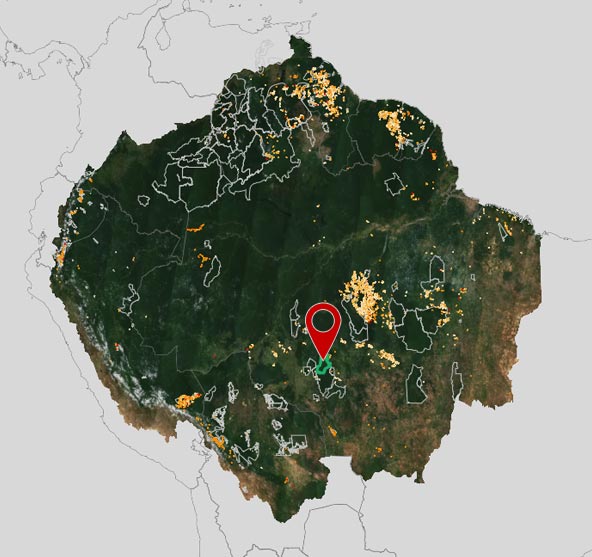
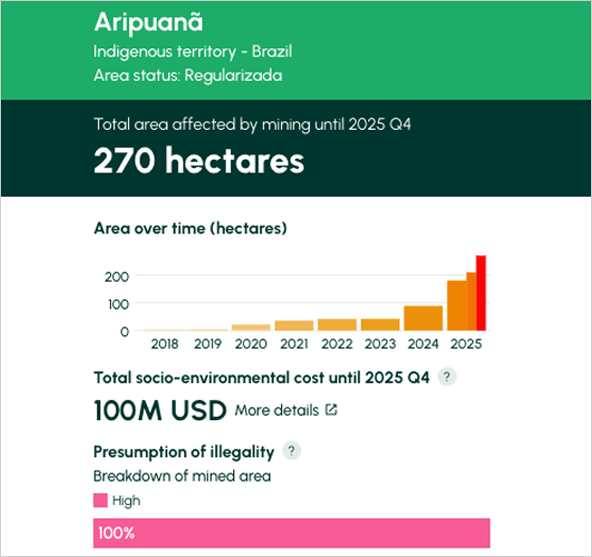
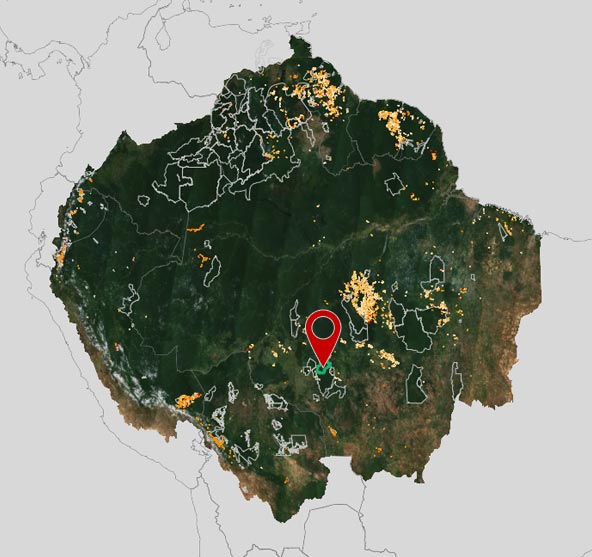
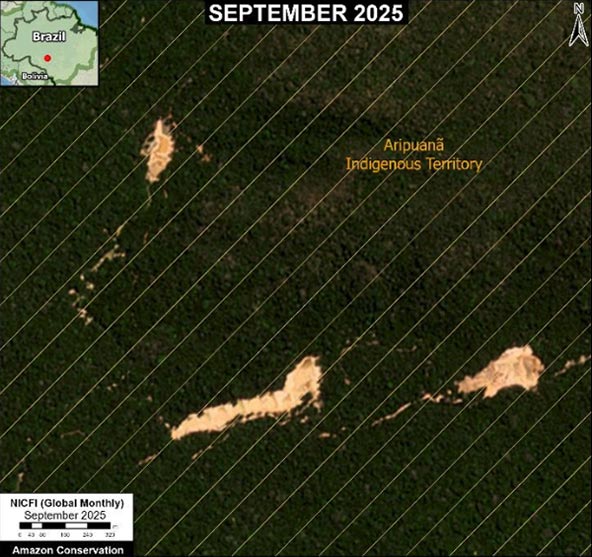
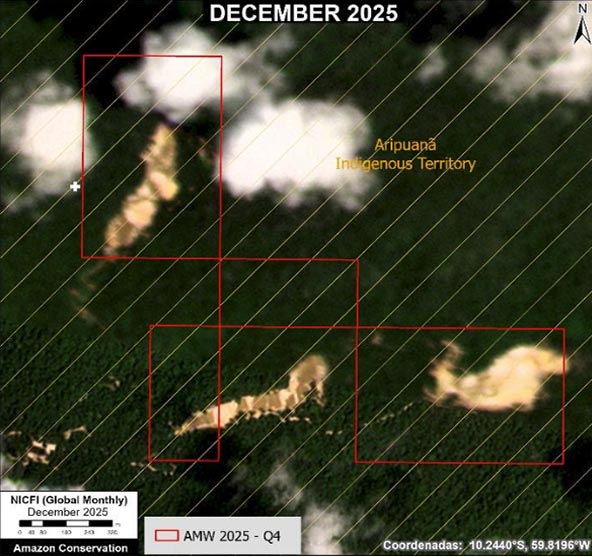
ARIPUANÃ - INDIGENOUS TERRITORY
BRAZIL
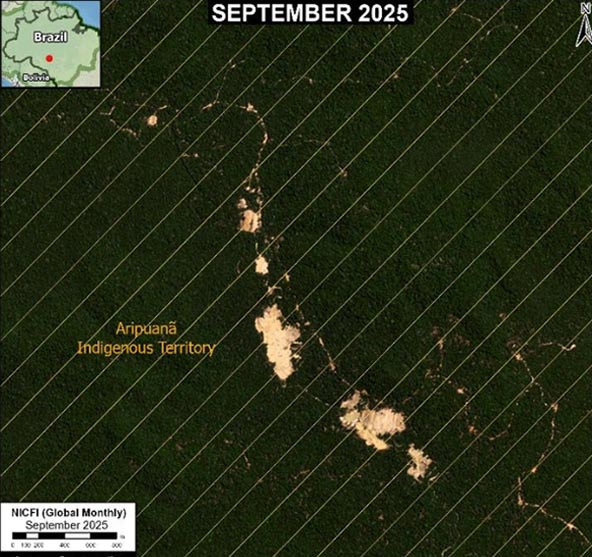
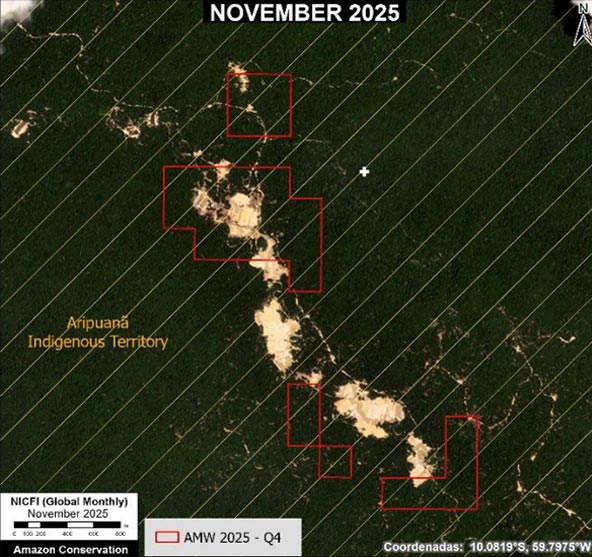
The Aripuanã Indigenous Territory gained official recognition in 1991 under Federal Decree No. 375. Located in the state of Mato Grosso, the territory is primarily home to the Cinta Larga community. The territory continues to experience increased deforestation pressure due to illegal logging and mining, owing to extensive diamond and gold reserves.
Planet Panel: The high resolution Planet Scope Images (3 m), shows the before (left) and after (right) of the expansion of mining into the Indigenous Territory.
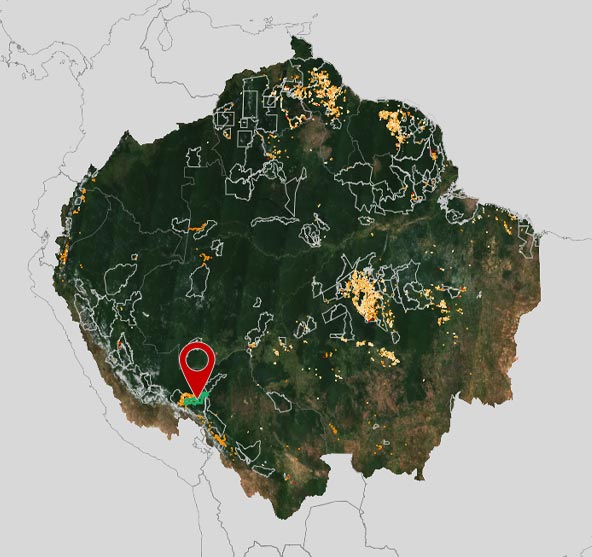
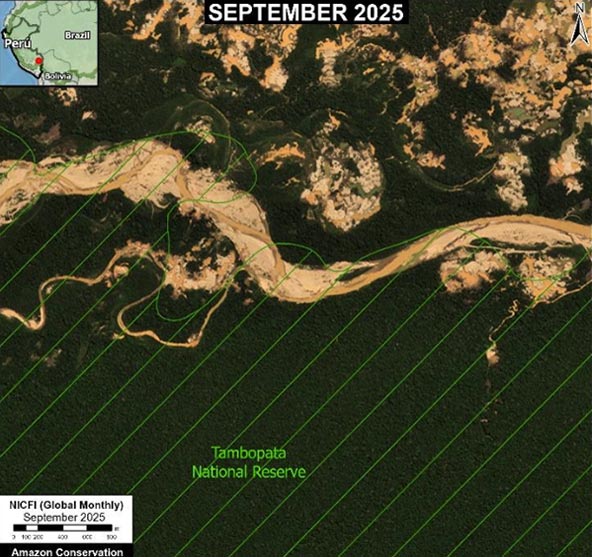
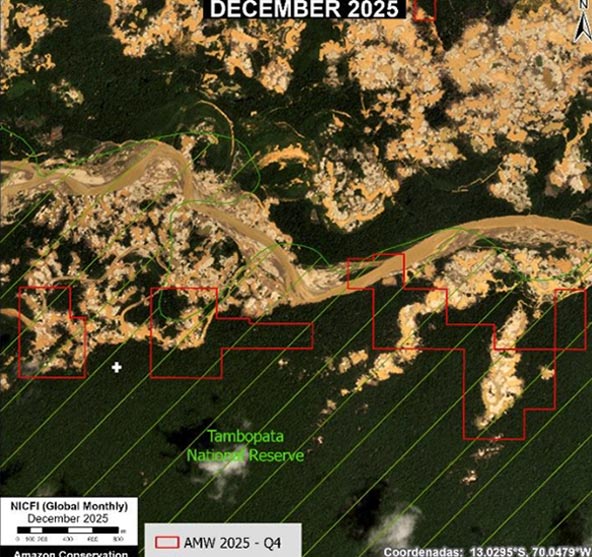
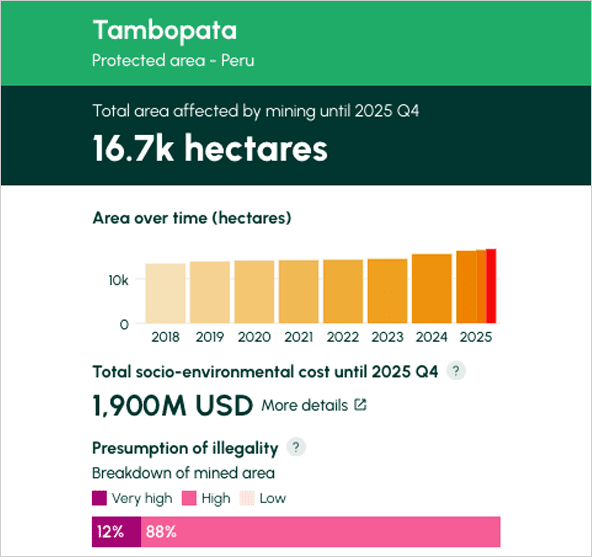
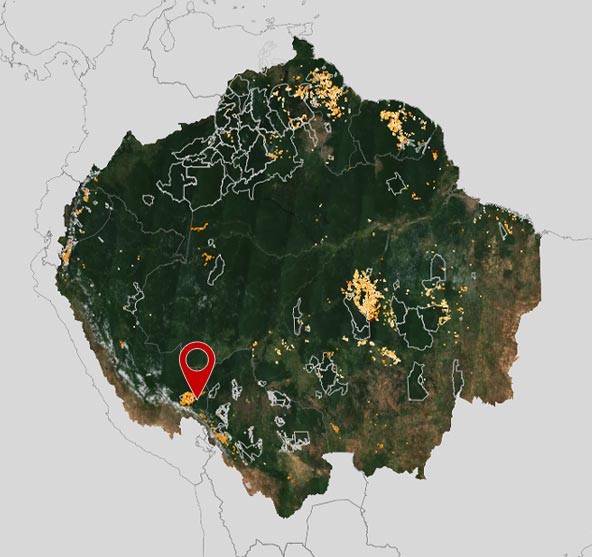
TAMBOPATA - PROTECTED AREA
PERU
The Tambopata National Reserve was officially established in 2000, by Supreme Decree No. 048-2000-AG. The territory is classified as an IUCN Category VI protected area, allowing for the sustainable use of natural resources by local communities. The reserve safeguards critical lowland Amazonian rainforest and is renowned for its exceptional biodiversity, including some of the highest recorded numbers of bird and butterfly species in the world.
Planet Panel: The high resolution Planet Scope Images (3 m), shows the before (left) and after (right) of the great expansion of mining into the interior of the Protected Areas.
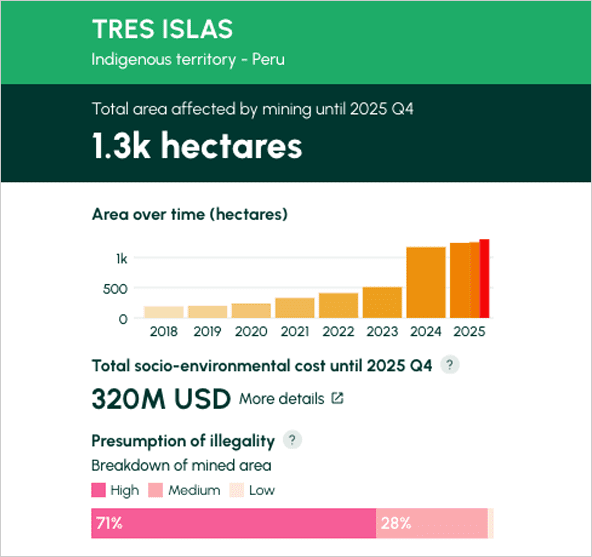
TRES ISLAS - INDIGENOUS TERRITORY
PERU
The Tres Islas Indigenous Territory was formally recognized in 1992, through Resolution R.D. 027-92-RI-DSRA-MD, and received its official land title in 1994. The territory is designated as a Native Community (Comunidad Nativa), granting collective ownership and territorial rights to the Ese Eja and Shipibo-Konibo peoples who have historically inhabited the land.
VIEW THESE AREAS AND MORE
ON THE AMAZON MINING WATCH PLATFORM
Conclusion
The findings of this report reveal the continuous expansion of mining-related deforestation, encroaching upon protected areas and indigenous territories. The persistent and pervasive nature of this threat underscore the escalating crisis of illegal gold mining in the Amazon. Consistent, data-driven monitoring provided by Amazon Mining Watch Panorama is crucial for understanding the scope of the problem and to promote accountability. Amazon Mining Watch and its partners will continue to provide quarterly and yearly updates about trends in gold mining expansion in the Amazon, information about the presumed illegality of these activities and their estimated socioenvironmental impact.
Methodology of monitoring systems
For Amazon Mining Watch, the mine detector is an artificial neural network, which we train to discriminate mines from other terrain by feeding it hand-labeled examples of mines and other key features as they appear in Sentinel-2 satellite imagery. The network operates on square patches of data extracted from the Sentinel-2 L1C data product. Each pixel in the patch captures the light reflected from Earth’s surface in twelve bands of visible and infrared light. We average (median composite) the Sentinel data across a period of many months to reduce the presence of clouds, cloud shadow, and other transitory effects. During run time, the network assesses each patch for signs of recent mining activity, and then the region of interest is shifted by half a patch width for the network to make a subsequent assessment. This process proceeds across the entire region of interest.

Acknowledgments
This report was made possible by the generous support of the Gordon and Betty Moore Foundation.